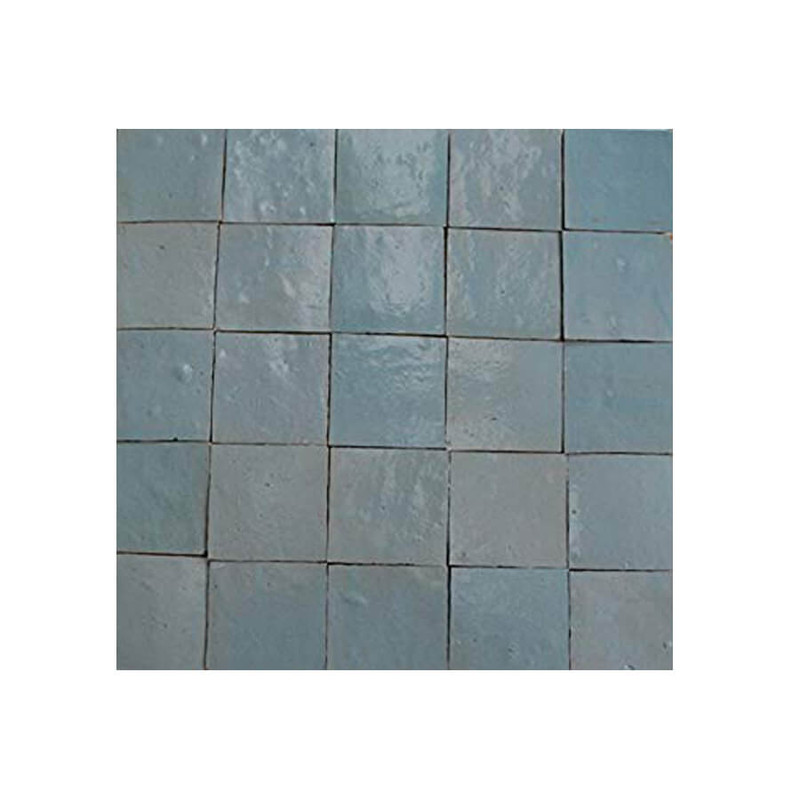
Zellige rewards precise specification and punishes vague ones. The material is hand-cut glazed terracotta — every piece slightly different by design — which means the spec has to control the things that matter and consciously release the things that don’t.
1. Approve the glaze in daylight, on a physical sample
Screens lie about zellige more than about any other material we ship. Glaze pooling, depth and the green-blue boundary shift dramatically between a photo and the tile in your hand. Order the sample box, hold the glaze against daylight at the actual site if you can, and make the written approval reference the physical sample — not an image.
2. Specify a 10–12% cutting-and-breakage margin
Zellige is cut to fit on site. A 1,075 sq ft wall needs 1,180–1,205 sq ft ordered. Under-ordering is the most common first-project mistake, and a top-up batch fired months later will never perfectly match the original glaze lot.
3. Walls are zellige territory; floors usually aren’t
For floors — especially commercial — specify bejmat: the same clay in brick format, dramatically more wear-resistant. Zellige on a restaurant floor is the most expensive mistake we see, and we will say so on the quote.
4. Put the tolerance in the contract
Our order confirmations state dimensional and glaze tolerances per product. Adopt them into your spec document verbatim. It protects everyone: the client knows what handmade means before the crate opens, and genuine defects stay clearly distinguishable from character.
5. Plan the lead time backwards
Standard glazes run 4–6 weeks; custom colours 6–8 plus matching rounds; then freight. Work back from the tiler’s start date, not the project end date, and tell us the real deadline — production slots are booked to it.
Specifying zellige on a live project?
Send the drawings — layout advice and the first quote are free.
Request a quote →